Cuprins
🐍 Welcome Back to Solaria. Nothing Has Changed.
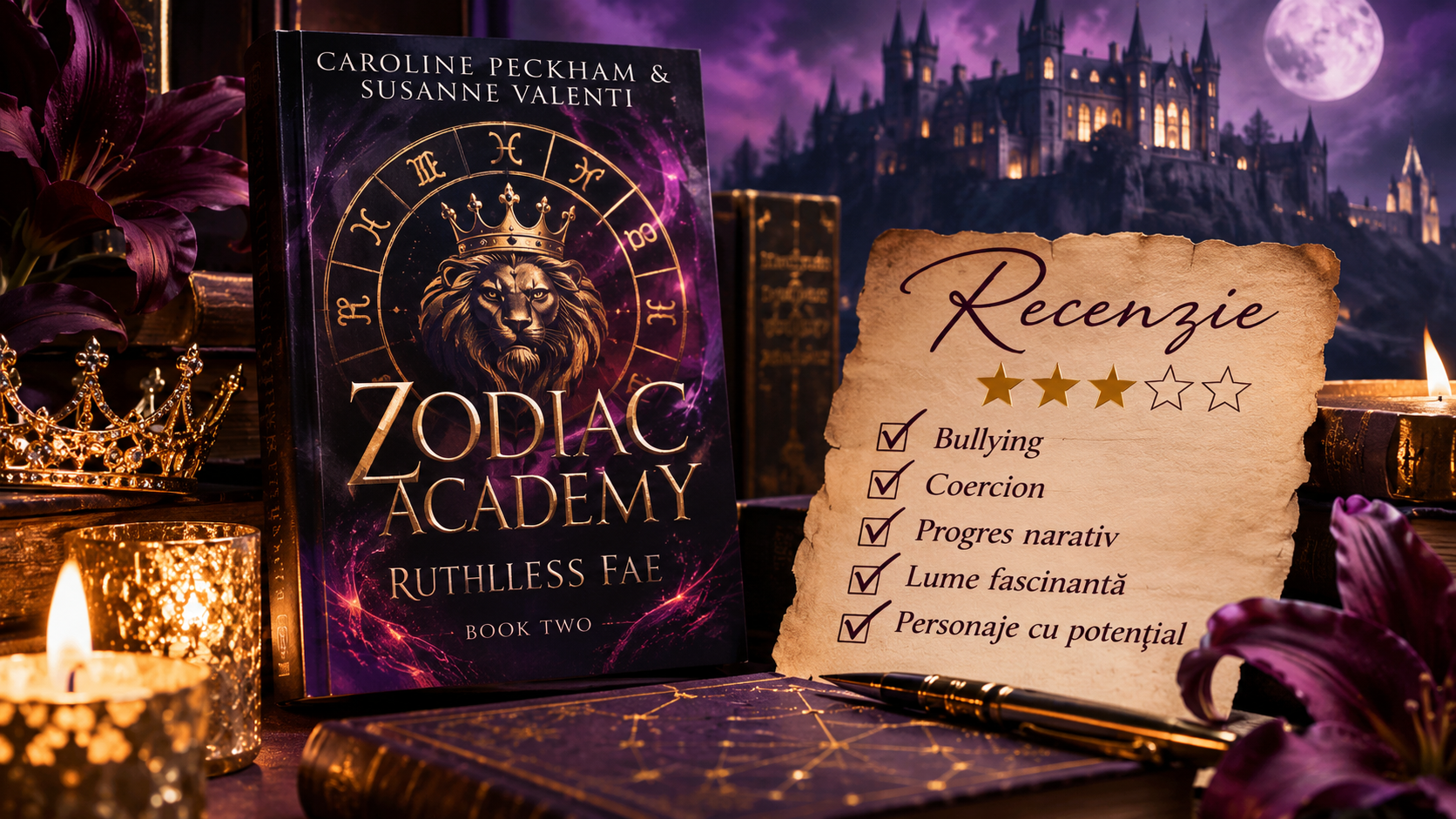
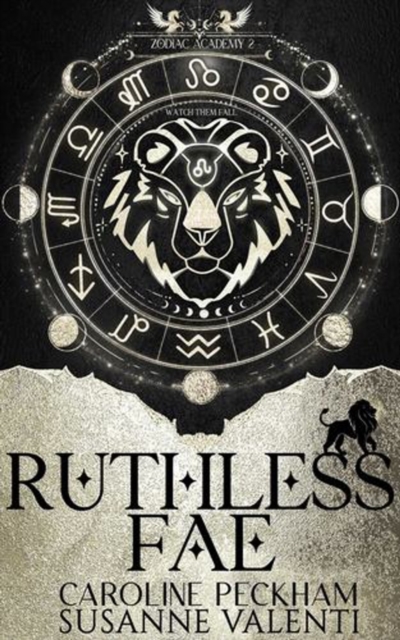
I finished The Awakening convinced that Solaria is one fascinating world, built on a brutal hierarchy, full of characters with huge potential and almost nonexistent morality. I did not fall in love with the characters, but I am intrigued by the world they live in. I started Zodiac Academy: Ruthless Fae (book 2), hoping to graduate from the tutorial and explore this world. I was ready to find out what hides behind the cruelty, how the power works, and how the characters deal with the aftermath of their own choices. This is my review of the second book in the Zodiac Academy series.
Well, the bullying goes on. The arrogance thrives. The Heirs keep going, convinced the entire universe exists solely to confirm their superiority, while the Vega twins are forced to survive yet another string of humiliating situations and power displays.
I am not saying that nothing happens. What I am saying is that, for the number of things that happen, we are to read a worrying number of pages.
⛓️ The bullying: when cruelty becomes routine
Reading The Awakening, I understood that Solaria functions on the survival-of-the-fittest principle. I also understood that the Vega twins threaten the existing order, and the Heirs are determined to make their lives impossible. Message received. Loud and clear. The problem is Ruthless Fae keeps hammering on the same issue without adding any new layers.
The bullying can be an extraordinary narrative instrument; it can unveil the power structures, show how violence becomes acceptable in a society, and expose the ways the aggressors are justifying their choices. But for this to happen, the story must evolve. There must be a real face-to-face with what it means to deliberately hurt someone.
In Ruthless Fae, I feel that the authors rely far too heavily on cruelty to maintain tension rather than explore it. After enough incidents, what initially felt shocking becomes predictable. I no longer find myself wondering why the characters behave this way. I just wait for them to be done.
There is a difference between building a brutal society and repeating the brutality until the reader becomes immune
🔗 Coercion, Consent and all the questions avoided by the story
Here is my biggest problem
Solaria is a world in which power is a condition for status, freedom, and the ability to say no. When magic, authority, intimidation, and romantic attraction meet, there is a question that, for me, seems impossible to ignore: how much freedom of choice there is when one person holds the power to coerce the other?
I don’t ask for a romantasy character to be a role model. I don’t want impeccable heroes, perfect relationships, or men who ask permission to breathe. But I want a story that takes the heaviness of its own premises seriously. Coercion does not mean physical force only. It may translate into threat, intimidation, pressure, or using a power shift to limit the other’s freedom. On the other hand, consent is not implied just because there is attraction.
This series had the opportunity to explore the differences between desire and obedience, vulnerability and weakness, and power and the right to subdue. What I am left with is the impression that these themes are present only for dramatic effect and are underdeveloped.
I am not bothered that the characters are making condemnable decisions. I am bothered, though, when the story seems more interested in the charm of the danger than its effects.
Dark romance doesn’t need morality, but it needs to be aware of its lack.
👑 The Heirs: power without responsibility
Darius, Seth, Max, and Caleb have the potential to become complex, compelling characters, especially in a world where family, loyalty, power, and identity are so deeply intertwined. The problem is that, so far, their aggressive behavior takes up far more space than exploring what actually drives them.
It’s not enough to show me that a character is cruel and then hint that they have their own wounds and inner conflicts. I want to see how those contradictions shape their choices, how they struggle with them, and whether they can acknowledge the harm they’ve caused. A difficult past may explain certain behaviors, but it doesn’t automatically excuse them. And romantic attraction isn’t a free pass to escape moral accountability.
Darius is probably the most interesting of the four, precisely because his relationship with his father adds another layer of complexity: the man who exerts power over others is himself trapped in a system of control. There’s plenty of material here for some serious psychological exploration. But that’s exactly why I want more from his character than yet another display of aggression.
🔥 The Vega Twins: Finally Showing Some Teeth
One thing that continues to work for me is the relationship between Tory and Darcy. They aren’t identical; they don’t react the same way, and they don’t handle their experiences the same way. Yet their bond remains one of the series’ most compelling emotional elements. They share a history, a loyalty forged long before Solaria, and their own reasons to fight.
And I especially love it when they stop being easy targets.
The revenge at the Pitball game is one of those moments when the story finally regains its momentum. Not because revenge solves the bullying problem, but because it temporarily shifts the balance of power. The twins are no longer just two girls having things done to them. They become characters who take the initiative, accept risks, and force others to react.
I wanted more moments like these. Not necessarily more revenge, but more actual character development.
🌑 A Fascinating World, a Story with the Brakes On
What keeps me from giving up on Zodiac Academy is the world the authors have created. Solaria has an intriguing social hierarchy, a magic system bursting with possibilities, and a struggle for power that could support a far more complex story than the rivalries unfolding at the academy.
Especially when the threat of the Nymphs and Lionel Acrux’s influence raises questions about who truly controls this society and who stands to benefit from its fear, there are enough clues to make me suspect that the real conflict goes far beyond the competition between the Vega twins and the Heirs.
And yet, Ruthless Fae spends far too much time revisiting conflicts we already know. The romantic tension develops, the rivalries continue, and we learn more about Solaria, but the narrative progression doesn’t justify the book’s length.
I don’t mind a slow-paced story. I mind a story that mistakes repetition for character development.
⭐ Verdict Zodiac Academy: Ruthless Fae: 3/5. Everybody Still Sucks.
Zodiac Academy: Ruthless Fae earns three stars for the world it keeps building, the bond between the Vega twins, a few excellent confrontations, and the questions it raises about who truly holds power in Solaria.
But it loses points for repetitive bullying, insufficient exploration of coercion and consent, and pacing that turns the narrative into an endurance test.
I don’t want perfect characters. I want complex ones. I don’t need evil to disappear from the story. I need it to have consequences. And I don’t need action in every chapter, but I do need to feel that the story is actually going somewhere.
Solaria has all the ingredients for an extraordinary story. Now I’d like the authors to start cooking instead of just showing me the ingredients.
Three stars. Again.
Everybody still sucks. But at least the Vega twins are learning to bite back.
1. Is Ruthless Fae worth reading if the first book didn’t convince me?
It depends on what bothered you. If you were intrigued by the world of Solaria, the second book gives you reasons to continue. If your main issues were the repetitive bullying and slow pacing, those problems are still very much present.
2. Is Ruthless Fae better than The Awakening?
For me, not enough to deserve a higher rating. Both books get three stars, although the second installment delivers a few more satisfying confrontations.
3. Is Ruthless Fae a romance or a story about power?
It tries to be both. And that’s precisely what raises some interesting questions about coercion, consent, and the freedom to choose – themes I wish the authors had explored in greater depth.
4. Is Zodiac Academy available in Romanian?
As far as I could find, no. Only the English edition is sold in Romania. You can find the reading order here: Zodiac Academy, reading order.
💬 A Question for Readers
When a character behaves cruelly, how important is it to you that the story explores the consequences of their actions? Can a difficult past explain someone’s behavior without excusing it?