
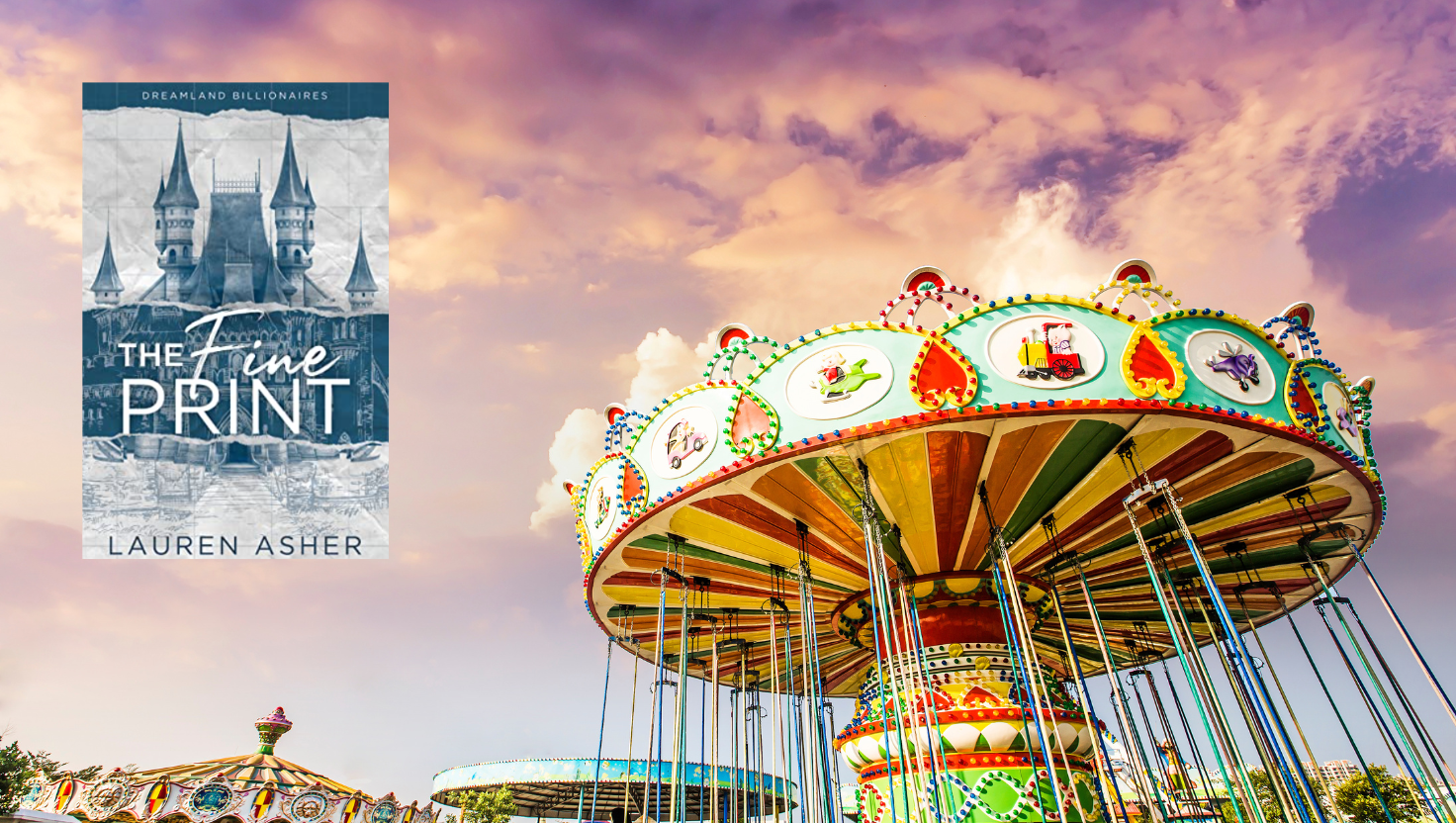

buy here:
https://l.profitshare.ro/l/13009761
🎢 I Was a Fool and Believed TikTok – A Rage-Review of Dreamland Billionaires Vol. 1 – The Fine Print by Lauren Asher
AI listened. Silly me, I listened. And I believed. I even acted on it – all those BookTok reels screaming about what’s hot, what’ll steal your sleep, your heart, and your last two brain cells.
And just like that, I ended up in Dreamland Billionaires, on Lauren Asher Street, with no emotional GPS and one measly hope: maybe, just maybe, the hype isn’t complete trash.
Spoiler alert (emotional, not plot-wise): it was.
🎠 Zahra & Rowan: gold, poverty, and pink-washed capitalism
At first glance, the story feels like a dream. Dreamland. A theme park where kids laugh, adults relive their childhood, and capitalism beams from the background like a Disney villain in a tux.
Enter Rowan Kane – billionaire, of course. Because who isn’t? The man’s probably got Bitcoin in his veins and a liver made of diamonds. He’s 24K gold on the outside and completely grayscale inside – the type of guy who runs an empire with the emotional range of a vending machine.
And across the tracks: Zahra. Creative, full of soul and ideas, and dead broke. She’s the type of employee who shows up to work for passion, and because electricity bills don’t pay themselves with vibes and dreams.
How is it possible that Mr. Gold-Pile McBillionbucks has zero vision and less than zero interest ? No clue. But Zahra’s here to fix that. With passion, hard work, and soul. Because apparently in Dreamland, heart is bottom-tier labor and money only makes everything worse.
📜 A dash of background… in case you float off into forgetfulness
Since the plot was gliding off into the great abyss of “meh,” Lauren Asher throws us a narrative bone: some backstory.
Rowan was born into money – I know, shocking. Another heir with unresolved trauma instead of personality. His grandfather? The actual brain and soul behind Dreamland. A visionary. A creative genius. Rowan? Wants to sell it all. Dreams don’t pay dividends, after all.
Then Grandpa dies. Probably a little disgusted with how his family tree turned out. But before he checks out permanently, he leaves his grandsons a challenge. Not punishment. Salvation. One task each, to be completed in a year. Or else? The entire empire – theme parks, millions, everything – goes to their father.
Ah yes… The Father™. A man with a businessman’s name and the résumé of a glorified squatter. An opportunist raised in Grandpa’s shadow, suddenly playing saboteur like a toddler denied his favorite toy.
It could’ve been deep. It could’ve been powerful. But no – they went for romcom-meets-capitalism with a sprinkle of cliché.
🌈 Zahra – the heart of the park, sacrificed on the altar of tired tropes
On the softer side of the capitalist battlefield stands Zahra. Small-town girl, raised among carousels and leftover cotton candy. For her, Dreamland isn’t just a job – it’s home. A place built by family, memories, scraped knees, and starry-eyed dreams. She doesn’t have money, but she’s rich in empathy. No power, but full of heart.
She’s not a saint. She’s not perfect. She’s real.
But why – in the name of all feminist rage – does she have to save a walking red flag?
Seriously. Why must every soft-hearted woman be the emotional janitor of a broken billionaire? Who signed this fictional agreement on our behalf? “Oh, you’re kind? Great – here’s a man with trauma, a fat wallet, and zero effort. Fix him!”
Zahra doesn’t owe Rowan healing. She’s not a therapist, nor a saint. But of course, she jumps in. Works overtime. Forgives. Empathizes. For what? For his money and a dead grandpa’s treasure map?
It’s exhausting to read stories where good women must fix broken men. Let the rich fix themselves for once.
⚔️ David vs. Goliath: glitter-coated with unresolved trauma
What brews between Zahra and Rowan is a classic conflict – wrapped in sparkles and HR contracts. A David vs. Goliath situation where David wears sneakers and dreams in watercolor, while Goliath is monochrome and allergic to feelings.
Rowan wants to sell Dreamland. For him, it’s a bleeding wound. The place where he buried his passion for art, and his ability to feel things. He doesn’t deal with pain – he markets it. Packages it. Monetizes it.
But Dreamland is not just business. It’s legacy. Childhood. A sanctuary. Zahra knows this. She fights not with money, but with memory and love.
And that’s their dynamic: one pulls upward, the other sinks deeper. We readers are stuck between idealism and emotional bankruptcy.
What could have been deep and emotional, it`s just predictable and shallow
💫 Zahra, with the slingshot of dreams – modern David in glitter and grit
She doesn’t want to defeat Goliath. She wants to heal him. She believes in kindness, color, and magic. She wants to revive Dreamland with fresh ideas, warmth, and laughter.
You don’t want a throne when you’ve lived through enough hardship. You just want your work to mean something. That’s Zahra. She puts her heart, soul, time, and energy into saving the park she calls home, and a man who doesn’t want to be saved.
She fights with optimism. He fights with sarcasm. And somehow, we’re supposed to root for this romance?
👑 Happily Ever After: Cinderella and the Recycled Redemption Arc
Of course, Cinderella gets rich. Literally. Rowan has a sudden change of heart, as all brooding billionaires do, and decides to “recycle” his cold-hearted corporate image through some shiny CSR projects. Praise be to Zahra – the emotional compost bin of capitalism!
And the big twist? A happily ever after. Zahra and Rowan will live out their golden years in a mansion made of trauma-healed glitter and reclaimed hope. Because, apparently, little girls everywhere need to learn that love means persistence, happiness means self-erasure, and the richer the man, the more he deserves redemption – forcefully if needed!
And so, we get a perfect ending to a story where love heals absolutely nothing, and joy is wrapped in shiny toys and emotional repression.
What I didn’t love
Dialogues sound like they were written for trailers, not real people.
The language is overly polished. Long sentences, drama fit for a telenovela.
Emotions come with a teaspoon – and right when they hit, scene change!
🖤 Whimsical Whispers Verdict
The Fine Print had potential. It had the setup for something meaningful. But it wasn’t mixed well. It flirts with psychological depth but fears intensity. It hints at romantic drama, then drowns in tropes.
⭐️ Rating: 1 star – for the paper, ink, and cover
I’d give this book 1 star – and only for the physical production: the paper it’s printed on, the ink that stains it, and the cover that at least pretends it’s a product of substance.
Because not every “fine print” holds value. Sometimes, it’s just plankton feeding the ego of a pointless narrative.
If you’re in a melancholic mood and want a read where the only tension comes from your own nerves, give it a try. But if you’re craving emotional realism, layered characters, and a story that haunts you… Move along.
